Background: de Vaucouleurs System
In the first part of this lab, you learned about Hubble's Tuning Fork and used it to classify galaxies. French astronomer Gerard de Vaucouleurs expanded on this classification system, creating a more detailed variant used by astronomers today.
The de Vaucouleurs system retains Hubble's basic division of galaxies into ellipticals, lenticulars, spirals and irregulars, but introduces a more elaborate classification system for spiral galaxies, based on three morphological characteristics: bars, rings, and spiral arms.
In de Vaucouleurs' system, SA is used to denote spiral galaxies without a central bar, SAB for intermediate spirals with a weak bar, and SB for those with a strong central bar.
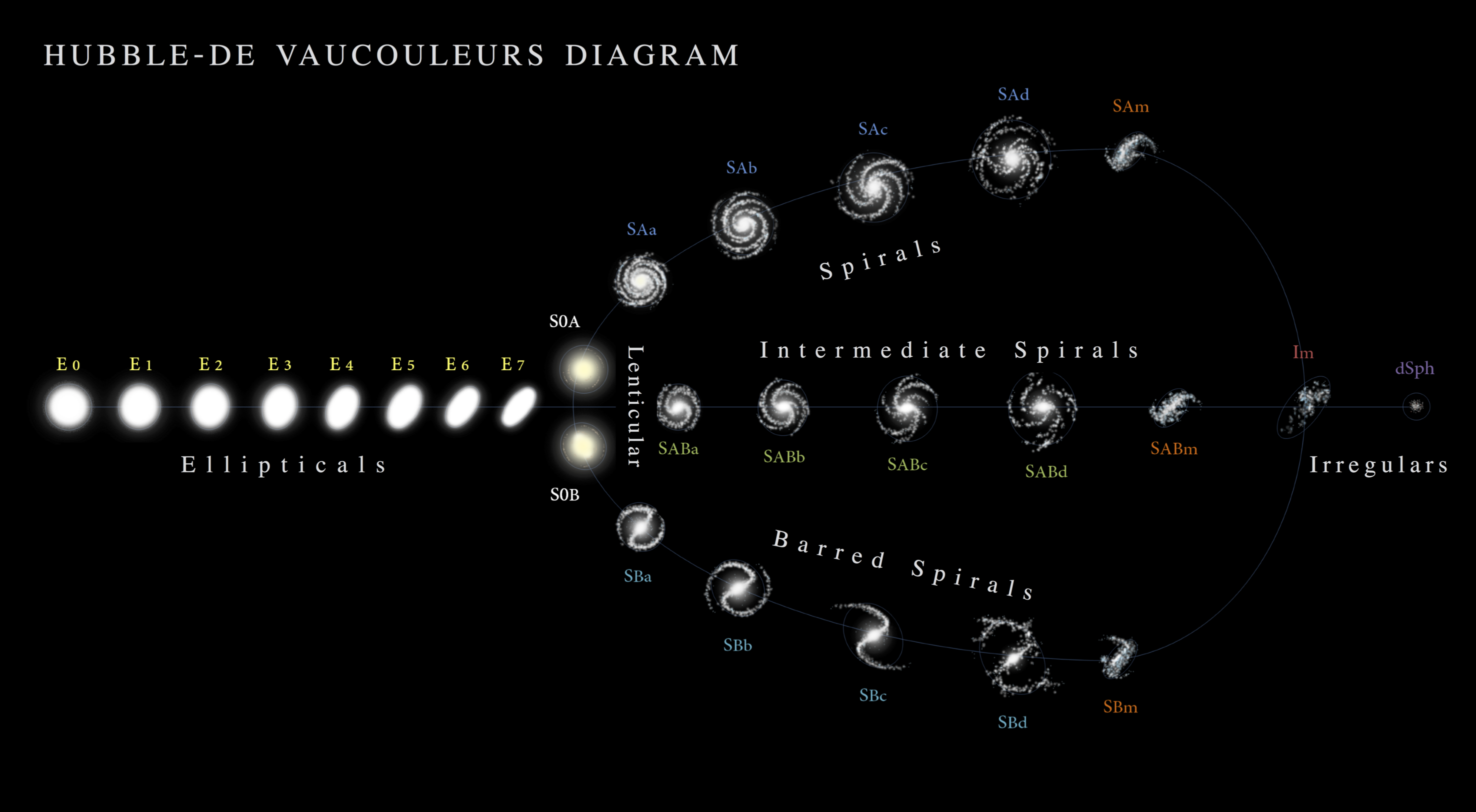
Elliptical Galaxies (E): Characterized by how spherical they appear, with 0 being spherical and 9 being oblong.
Giant Elliptical Galaxies (cd): Giant elliptical with a large halo of stars
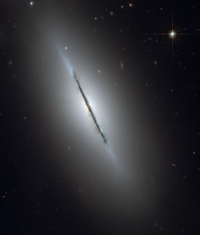
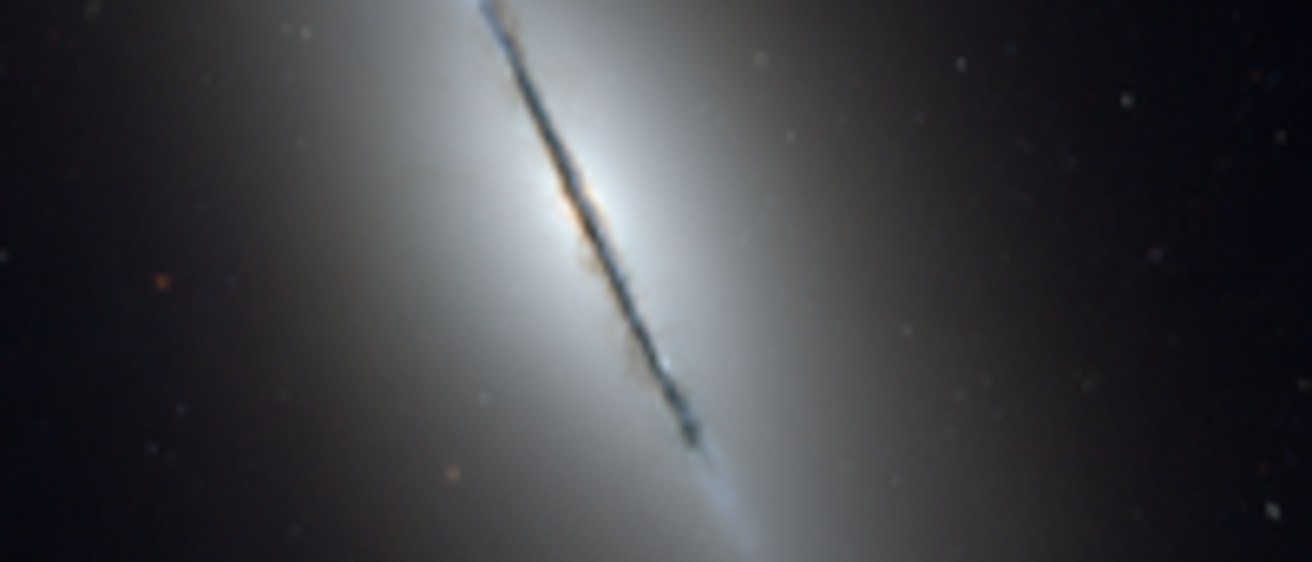
Lenticular Galaxies (S0): Disk like galaxies with a central bulge but no spiral arms. Many lenticular galaxies are viewed edge on, which makes determining any spiral arm structure difficult.
Anemic Spirals (A): Anemic spiral galaxies are disk galaxies with faint spiral arms and faint central bulges. They can be thought of as intermediate steps between Lenticulars and Spirals.
Spiral Galaxies (SA): Disk like galaxies with spiral arms and a central bulge. How tightly wound the spiral arms are run from ‘a’ to ‘c’, where ‘a’ is tightly wound. ‘d’ is used to describe spirals with faint arms and a faint bulge. ‘m’ is an irregular spiral with no bulge.
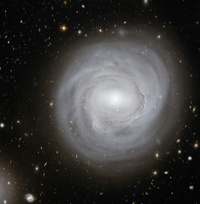
Barred Spiral Galaxies (SB): These types of galaxies have the same subclassifications as SA galaxies, only that they have a noticable bar in the central component.
Irregular Galaxies (I): Usually classified as Im, these are highly irregular galaxies as Hubble may have classified them.
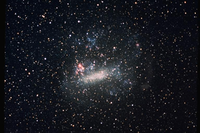
Each of these broad classifications can also have an addition of:
irregular (m): a bulgeless galaxy
peculiar (p): A galaxy which is the result of interaction and may have a secondary galaxy ‘attached’ to it.
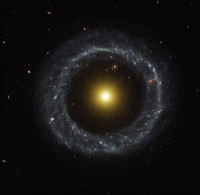
ring (r): Galaxies that have ring structures.
To further confuse the issue, it is possible to have SAB galaxies, which are spiral galaxies with an intermediate bar structure. There can also be intermediate steps for how tightly wound the spiral arms are, leading to labels like SBab, which is a barred spiral with arms between the ‘a’ and ‘b’ label. Similarly, there can be SABab or SABbc.
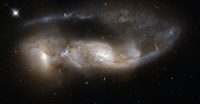
As a side note, galaxy morphology is, many times, subjective, and that is what makes it difficult. There are many characteristics that are trying to be described with as few labels as possible, which will lead to confusing labels. So with that confession, let us start stamp collecting.
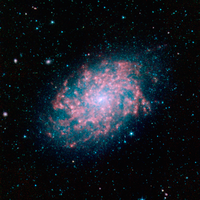
Exercise: Classifying Galaxies with de Vaucouleur.
- Choose a galaxy cluster from the list below. Using the images provided, classify the galaxies using the de Vaucouleur system and the simple Hubble Tuning Fork from part 1.
Galaxy Clusters:
Virgo I Cluster
Virgo II Cloud
Virgo III
Canes II
Centaurus A Group
Maffei Group