Resources: Airmass.org, Stellarium, Telescopius, SIMBAD
Before you can decide which object you want to study, you have to determine what is actually visible in the night sky! This can be done using Airmass.org.
Finding When an Object is Observable & The Best Time to Observe:
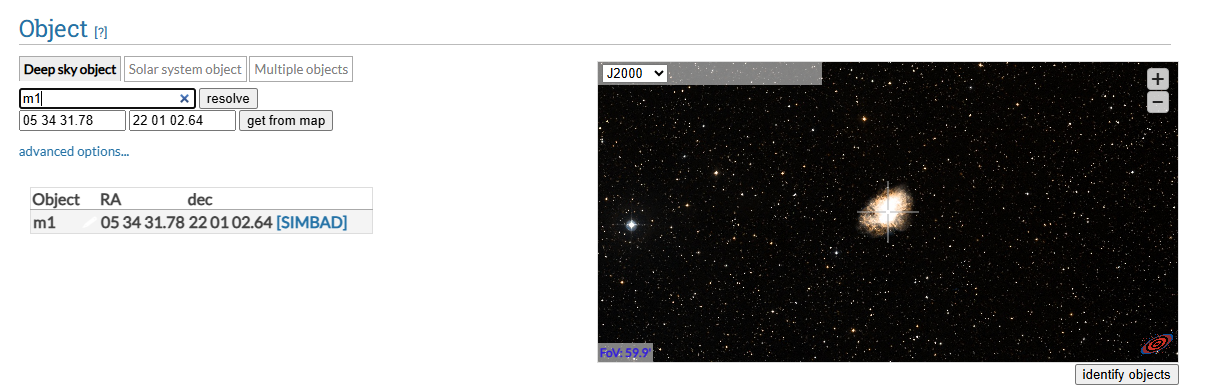
To find when an object is observable, you may simply type the object name into the search bar in the "Object" box and hit enter. This will pull the object's RA and dec (astronomical coordinates) as well as a preview of what the object looks like from SIMBAD, as shown below.
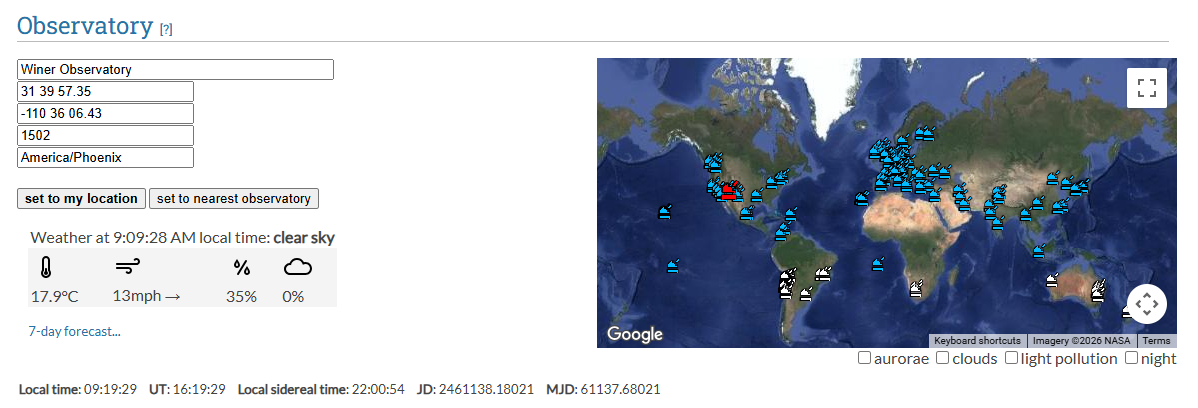
Next, you must ensure that the "Observatory" box is set to "Winer Observatory" in Arizona, as this is where the RLMT is located. Once selected, this will show the observatory's location highlighted in red on the map to the right and populate weather and local time information.
Once you have set the information in both the object and observatory boxes as explained above, you can scroll down on the page to see a visibility chart for your object. This chart shows the object's altitude (or height in the sky) plotted over the course of the night via a blue line. You may hover your cursor over the line to see its altitude at any given time in the night (with time listed in MST on the bottom of the chart, and UTC on the top).
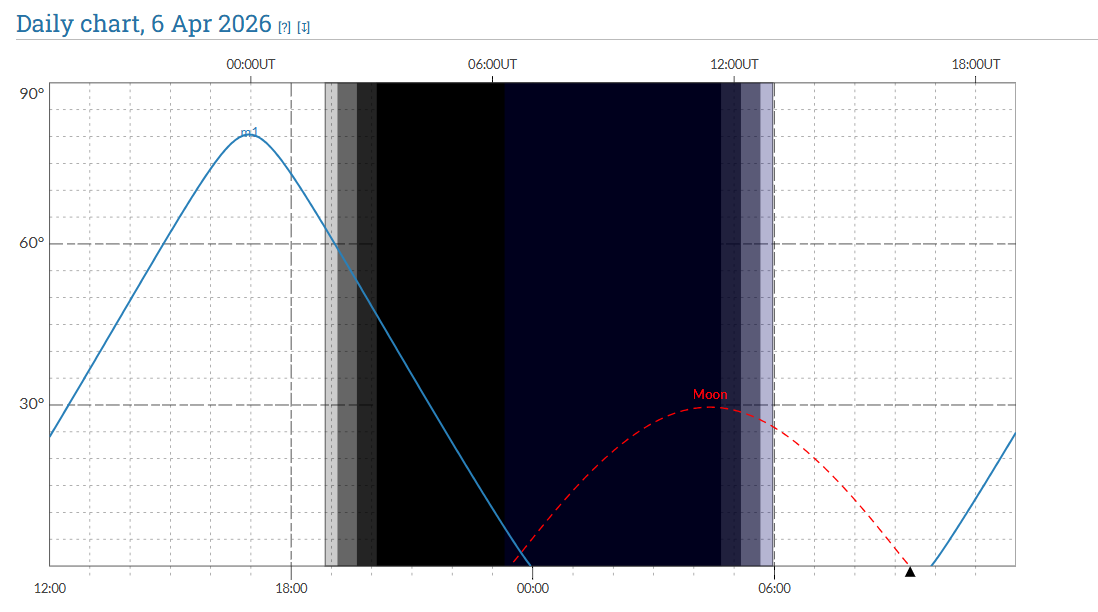
For a target to be observable, it generally must be above 30 degrees in altitude at some point during the night (the dark part in the middle of the graph). If an object is observable, the best time to view it is when it is highest in the sky. So, for example, it would be best to view M1 (as shown above) around 20:12 local time, as it is fully dark by that point, and the object is at the highest altitude it will be over the course of the night.
Finding Additional Information about an Object:
To gain more information about any particular object, such as object type or additional names, Stellarium, Telescopius, and SIMBAD are all great resources.